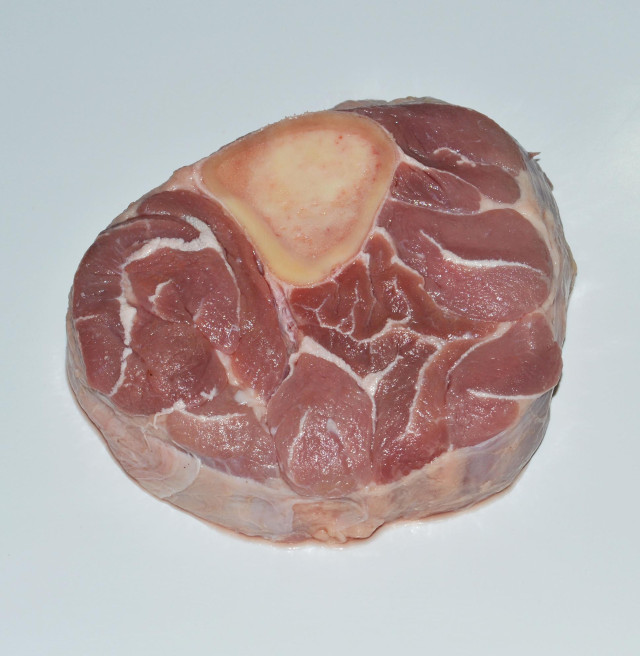
This food is one serving
The values below show the total nutrition for this food.
19.95 mg
Sodium · 1% DVSalt equivalent is estimated from the sodium value. It does not necessarily represent the exact amount of table salt added.
Less than ⅛ tsp salt eq.
0.37 g
Sat. fat · 1% DVFat equivalent is an approximate household-measure visualization. Saturated fat may come from different ingredients and is not necessarily present as a separate spoonful.
Less than ⅛ tsp fat eq.
40.25 kcal
Energy from macronutrients
Fat12%•1.12 g
Protein87%•7.53 g
Nutrition highlights
Good source of
Vitamin B32.45 mg NE15%
Phosphorus61.6 mg8%
Vitamin A42 mcg RAE6%
Uses FAO/WHO Codex guidelines for nutrition and health claims.
Monitor
No limit or monitor nutrients meet the FDA high threshold for this serving.
Uses the US FDA 5/20 Rule for % Daily Value.
All nutrients
Get enough
Limit
Monitor
The daily targets are estimates for a 19-29 year-old male. Individual needs may vary. For your personal needs, please consult a dietitian.
Calories | 40kcal (1% DV) |
Macronutrients
Total Fat | 1.12 g(2% DV) |
Saturated Fat | 0.37 g(1% DV) |
Cholesterol | 11.2 mg(3% DV) |
Unsaturated Fat | 0.55 g |
MUFA | 0.51 g |
PUFA | 0.04 g |
Total Carbohydrates | 0 g(0% DV) |
Dietary Fiber | 0 g(0% DV) |
Sugar | 0 g(0% DV) |
Protein | 7.53 g(10% DV) |
Vitamins
Vitamin A | 42 mcg RAE(6% DV) |
Beta-carotene | 0 µg |
Vitamin C | 0 mg(0% DV) |
Vitamin B1 | 0.01 mg(0.58% DV) |
Vitamin B2 | 0.04 mg(3% DV) |
Vitamin B3 | 2.45 mg NE(15% DV) |
Minerals
Calcium | 12.6 mg(1% DV) |
Iron | 0.63 mg(5% DV) |
Phosphorus | 61.6 mg(8% DV) |
Sodium | 19.95 mg(1% DV) |
Source & Notes
Source: Philippine Food Composition Tables: F035
Values are for general nutrition education. Actual values may vary by ingredients, preparation, and serving size.
Images